Commercial roofs are built slightly differently from the types of residential and domestic roofs. They need to be extra strong and robust to protect the commercial buildings from the elements for a long time. Due to commercial buildings often being of a larger size, and therefore having a larger roof, cost-effectiveness is also vital.
However, if you are choosing a new commercial roof, you should never base your choice on price alone. You’ll need to consider the standard of durability and longevity, as well as the level of maintenance you’ll be able to keep up with, and how high you want the aesthetic appeal. Getting these decisions right from the outset can save you significant time and money in the long run, which is why speaking to an experienced roofing contractor is always a worthwhile first step.
At MG Roofing, we have years of experience working on commercial properties across North Wales, from small business premises to larger industrial buildings. Whether you need a full roof replacement or ongoing roof maintenance, our team is on hand to help you make the right choice for your property and your budget. You can also browse our gallery to see examples of our completed commercial and domestic roofing projects.
What is the best roof for my commercial property?
If you can’t decide on which roofing system to choose for your property, we have some helpful advice.
Firstly, commercial roofs in the UK are often grouped into three groups:
- Low-pitched roofs
- Flat roofs
- Pitched roofs
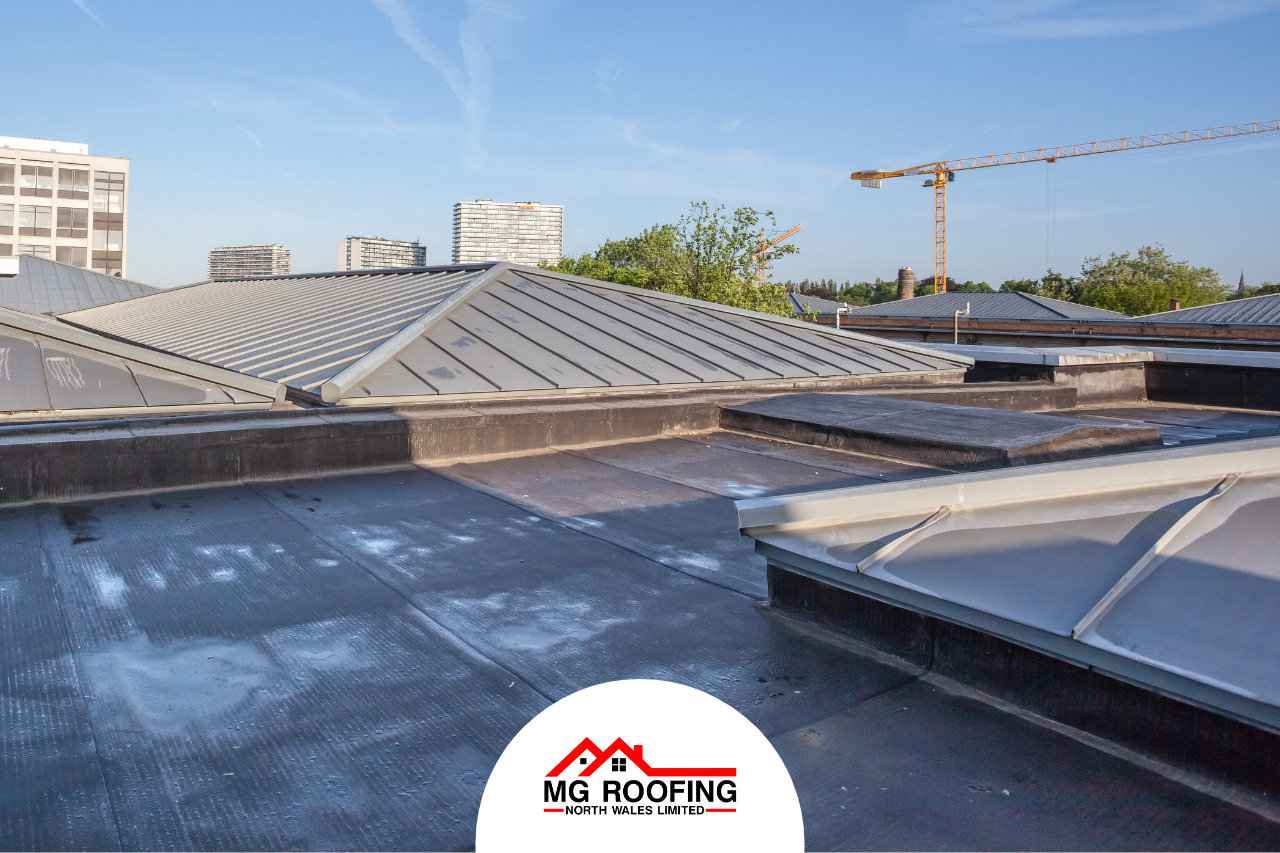
Flat roofs are the most common choice of roofing in the UK, owing to their cost-effectiveness and reliability. Flat roofing is extremely durable, and they also have the added benefit of quick installation. Fewer materials are needed when installing a flat roof in comparison with other solutions, making it great value for money. So, if you’re setting up a business space, you can see why this is a popular choice!
Drainage can be a small challenge with commercial flat roofs, but you can avoid this issue by arranging regular roof inspections. It is also worth considering that modern flat roofing materials, such as EPDM rubber, have significantly improved the lifespan and waterproofing performance of flat roofs in recent years, making them an even more attractive option for commercial properties of all sizes.
Low-pitched roofs are similar to flat roofs; they are durable and often inexpensive. Low-pitched roofing solutions are commonly used for larger-scale commercial buildings, and industrial warehouses and factories. Due to their size, they are harder to inspect, so ensuring significantly better drainage helps to prevent small issues from occurring.
If you own or manage a commercial property with a low-pitched roof, it is important to schedule regular professional inspections. Catching minor problems early, such as blocked drainage channels or small areas of damage, can prevent far more costly repairs further down the line. Our team at MG Roofing is experienced in working on all types of commercial roofing systems, so don’t hesitate to get in touch if you have any concerns.
Pitched roofs are roofs that have a prominent slope or a higher pitch. Due to this, they will always have much better drainage than the other two solutions. They will have no risk of water accumulation, and as they are more visible, they will often come with a better aesthetic appeal.
Pitched roofing solutions are likely to cost a little more than the others, although their longevity makes up for this. A well-maintained pitched roof can last for many decades, and with the right materials such as slate or tiles, it can add real character and value to a commercial property. Pitched roofs are also well suited to properties in areas that experience heavy rainfall, making them a practical as well as attractive choice for commercial buildings throughout North Wales.
Other roofing considerations for commercial properties
Beyond the type of roof, there are several other elements to consider when planning a commercial roofing project. Lead work is an important part of many roofing systems, used to seal joints, flashings, and areas around chimneys to prevent water ingress. Poor lead work is one of the most common causes of roof leaks, so it is essential that it is carried out by a skilled and experienced roofer.
Fascias and soffits also play a vital role in protecting the edges of a commercial roof. They help to keep moisture out, support the guttering, and contribute to the overall appearance of the building. If your fascias or soffits are showing signs of damage or deterioration, it is worth having them inspected and replaced as part of any wider roofing work.
For commercial buildings that would benefit from additional natural light, roof windows can be a fantastic addition. They can help to reduce energy costs by bringing natural light into otherwise dark spaces, and they can also improve the working environment for staff and visitors alike.
Why choose MG Roofing for your commercial roofing project?
With a variety of roofing materials to choose from, it is easy to find the perfect roofing solution for your commercial property. At MG Roofing, we pride ourselves on delivering high-quality workmanship on every project, whether it is a small repair or a full commercial roof installation. Our experienced team works across Bangor, Caernarfon, Anglesey, and the wider North Wales area.
We understand that commercial roofing projects need to be completed efficiently and with minimal disruption to your business. That is why we work closely with our clients from the initial consultation right through to project completion, keeping you informed at every stage. You can read what our previous customers have said about us on our testimonials page.
If you require some friendly advice, we’ll be happy to help. Contact a member of our team today by calling 01248 422698 or emailing [email protected]